That overlap is exactly where things can go wrong.
What’s the Risk of Siloed Sustainability Reporting?
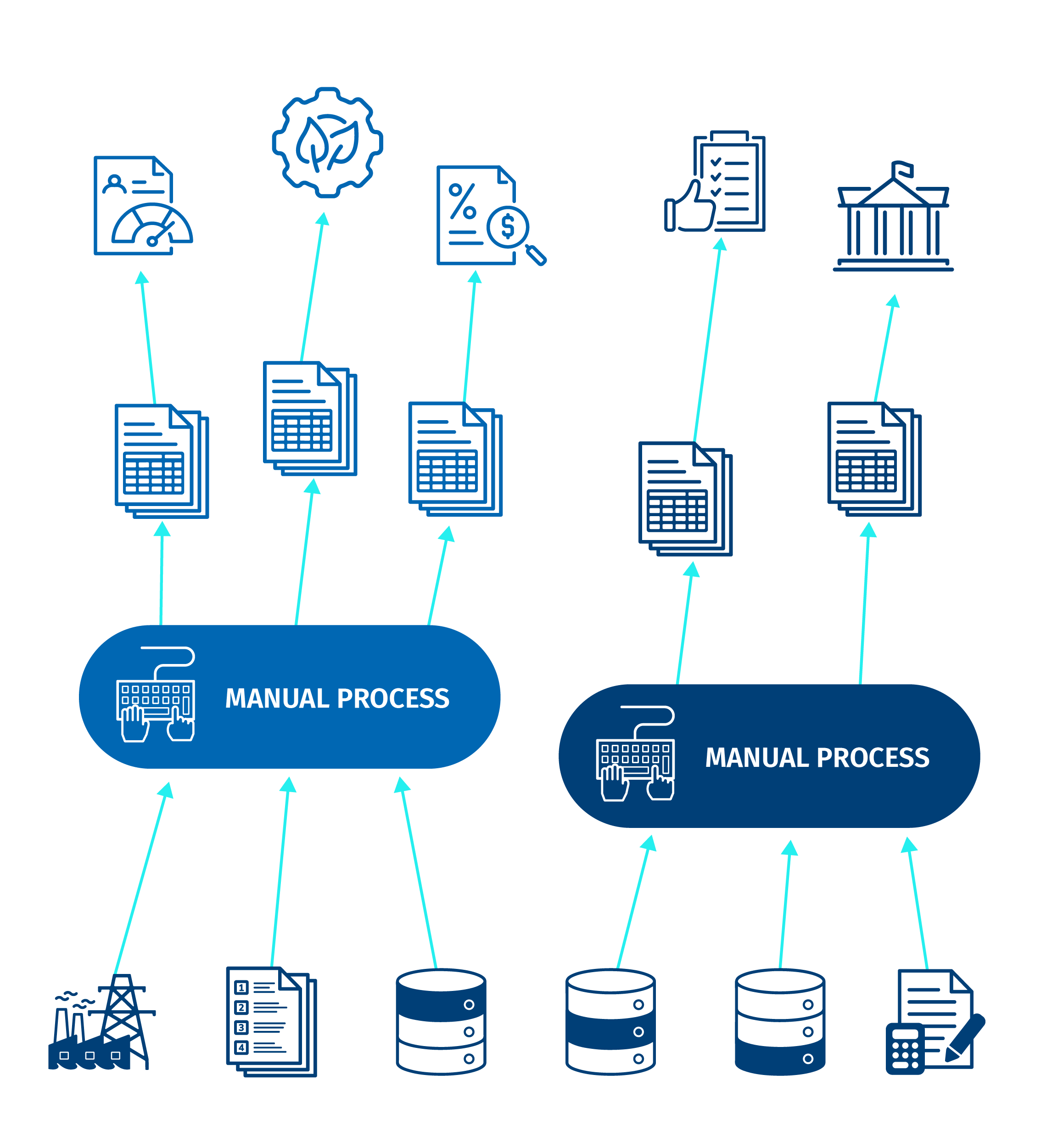
Here’s the problem: most sustainability teams build each report separately, often in separate spreadsheets by separate teams. And in the age of AI, that’s a real liability. Powerful tools can now scrape and cross-reference every number you’ve ever published. If your product-level carbon footprints don’t add up to your total reported emissions, someone will notice. If two reports contradict each other, that inconsistency won’t stay buried for long.
The stakes are high. Sustainability data is material — investors and customers make real decisions based on it. Data errors and omissions aren’t just embarrassing; they can lead to costly mistakes for the people relying on your numbers. And that’s when lawsuits happen.
How to Fix Siloed Data: Prepare Once, Report & Publish Many Times
The answer is a Unified Data System — and the philosophy behind it is simple:
“Prepare Sustainability Data Once, Publish Many Times.”
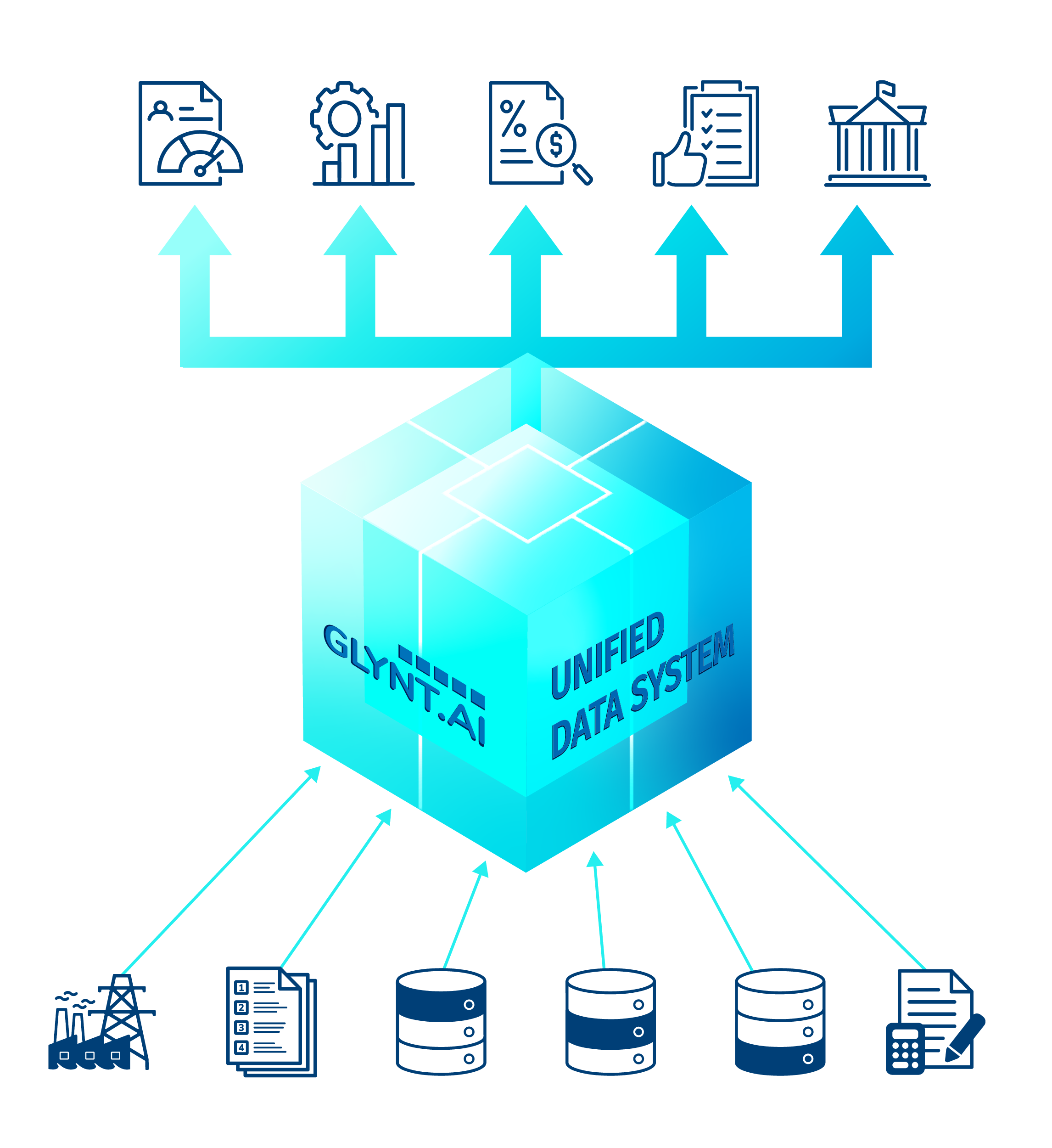
This is the approach GLYNT.AI has built its Unified Data System around — simple to understand, even if the execution requires the right infrastructure. A Unified Data System has two core components: a master database that serves as your single source of truth, and a rigorous data quality and governance process with auditable approvals and workflows built in.
Instead of reinventing the wheel for every report, your team maintains one clean, verified dataset — and draws from it every time a new disclosure is needed. The data quality checks and approval workflows only need to be set up once, but they protect every report you publish.
Why Does a Unified Data System Work?
- One source of truth. Every output traces back to the same dataset.
- No hidden inconsistencies. When data lives in one place, contradictions can’t hide.
- Built-in governance. Auditability isn’t an afterthought — it’s baked into the process.
And practically speaking, it’s far more cost-effective. When everyone’s working from the same dataset, you don’t need to run duplicate data quality checks across a dozen spreadsheets. You run them once, on the data that matters.
THE SILOED DATA SYSTEM
THE UNIFIED DATA SYSTEM
Ready to Bring Unified Data to Your Team?
If your sustainability team is spending too much time reconciling reports — or worrying about what happens when your numbers get scrutinized — it’s time to talk. Bring the power of unified data to your sustainability team. Talk to GLYNT.AI
