Product Overview

A quick look at the GLYNT.AI solution

Audit-Ready Sustainability Data

Prepared for ISSA 5000 and other audit standards

Sustainability Data Layer

Works with the software and AI you already use

Approval Workflows for Sustainability Data

Four-Eyes review for audit compliance

Finance-Grade Sustainability Data

The same rigor as financial data

Integrate with Financial Data

Reconcile against your financial ledger

AI-Ready Sustainability Data

Sustainability data with structure and context

Powered by Green AI

Built for low energy use and emissions

Best Practices for Sustainability Data Management

Manage data instead of wrangling it

Enterprise Security

Privacy, security, and controls

Sustainability Data Accuracy

We test your data so you don’t have to

Comprehensive File Capture

Extract data from scans, portals, and messy formats

Customized Reporting

See what’s missing or flagged before deadlines

Audits & Assurance

Traceable data, approval workflows with SOC compliance

Business Value Add

Customize output files for CSRD, IFRS, CBAM, UKSRS

Energy Data Management

Granular data for transparency and cost reductions

Waste Data Management

Pull files from everywhere, send data to anywhere

Scope 3 & PCFs

Stop chasing suppliers, move to finance-grade quality

Blog

What’s new with GLYNT

Customer Stories

Industry applications for GLYNT solutions

Guides

GLYNT’s expertise and thought leadership

The #1 Lesson Sustainability Can Learn from Finance

by | Apr 27, 2026

The #1 Lesson Sustainability Can Learn from Finance

There’s a $24B industry built around this problem. Sustainability hasn’t caught up yet.

Investors are demanding higher-quality sustainability data. They can earn a higher return if they include sustainability data in investment selection. Investors want to see audited data prepared with standard IT controls, as these two factors vastly increase data consistency and reliability.

As sustainability teams respond to these demands, they often collaborate with financial data ops teams, IT teams and controllers. All of these folks have been working in finance for decades; finance is their go-to model of how to get the job done. Sounds good, right?

But sustainability teams are missing a key part of the picture. Take a look at this financial accounting ecosystem map, prepared by NYCA, a venture capital firm. Notice that the AP and ERP systems are in the top middle area. To the right are all of the reporting, tax, and audit software vendors. To the left are all the accounting and financial data preparation vendors.
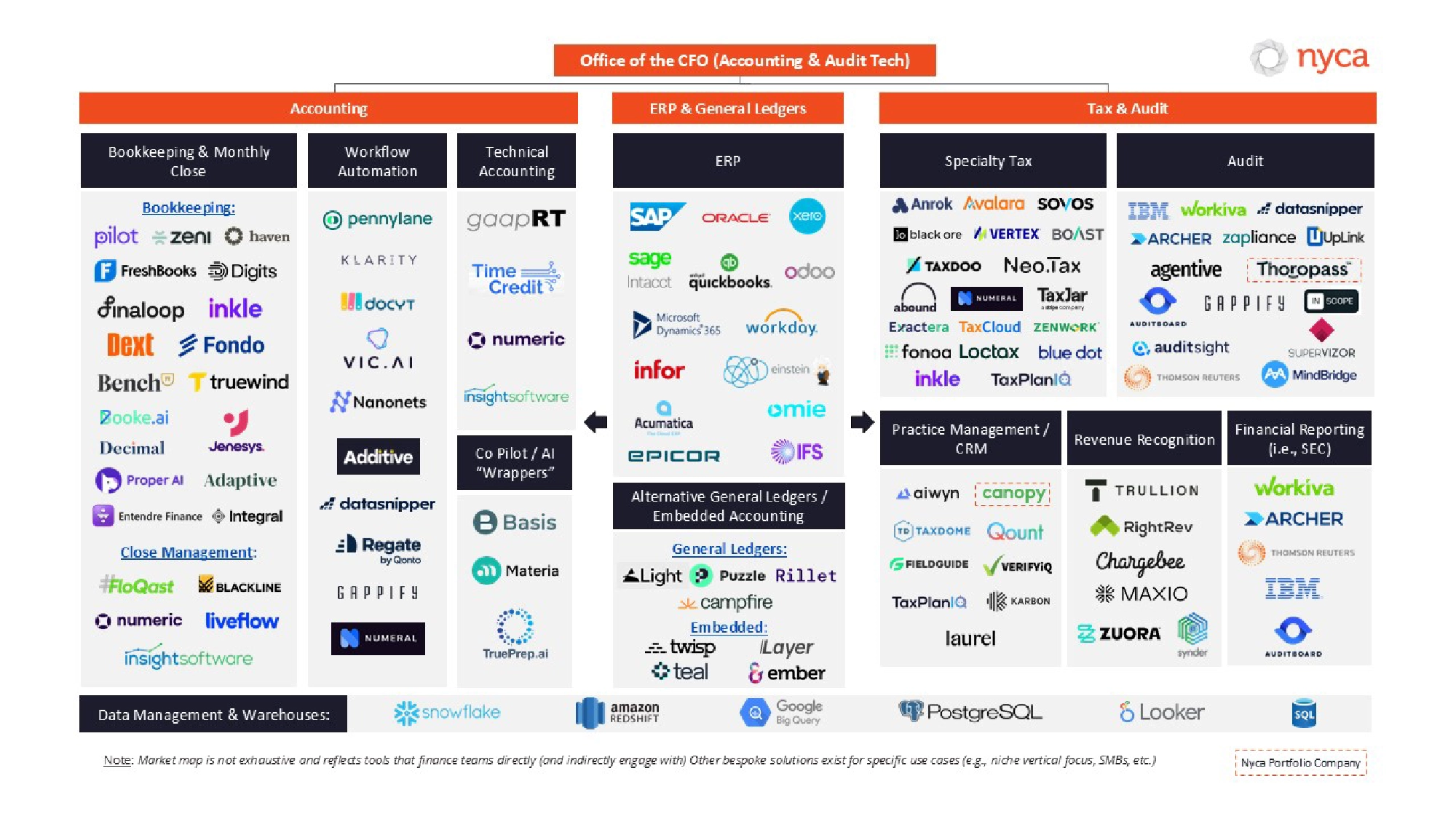
The map is striking — dozens of specialized vendors exist purely to prepare data before it ever reaches the core accounting systems.

The point: Many, many companies use the products that come before and after the AP and ERP software. Accounting data does not simply flow into AP and ERP, it must be carefully prepared. And the data preparation challenge is so big that entire industries have been built around it.

In fact, a quick internet search shows that there is a $24B market for accounting data preparation services and software. That’s a lot of spending to avoid pain and to get more accurate data. Sustainability teams should not ignore this lesson from finance: Data preparation does not just happen, it is a hard problem that needs specialized tools and workflows.

In fact, sustainability has a bigger data preparation challenge than finance because of incredibly varied data sources, a higher rate of change, noisy real-world data and the lack of built-in systems.

The #1 lesson from financial accounting is that data preparation is critically important, quite painful and requires purpose-built tools and methods. There is no shortcut.

Are you surprised? Or just delighted to see your pain validated?

Let’s get sustainability teams on the right data quality footing — with tools and systems built for the job.

GLYNT.AI helps sustainability and finance teams build the data foundation that makes reporting and business decisions credible and actionable — automating primary data collection, standardizing fragmented inputs, and delivering audit-ready outputs at 99.5% accuracy.

Ready to see how it works? Talk to GLYNT.AI