

The ever-expanding demand for carbon emissions data from every corner of the supply chain
“By 2028, if you don’t report your carbon emissions in the EU, you’ll lose your license to operate.”
Oliver Ganser, Vice President — BMW
Processes, Digitalization, Governance and Catena-X
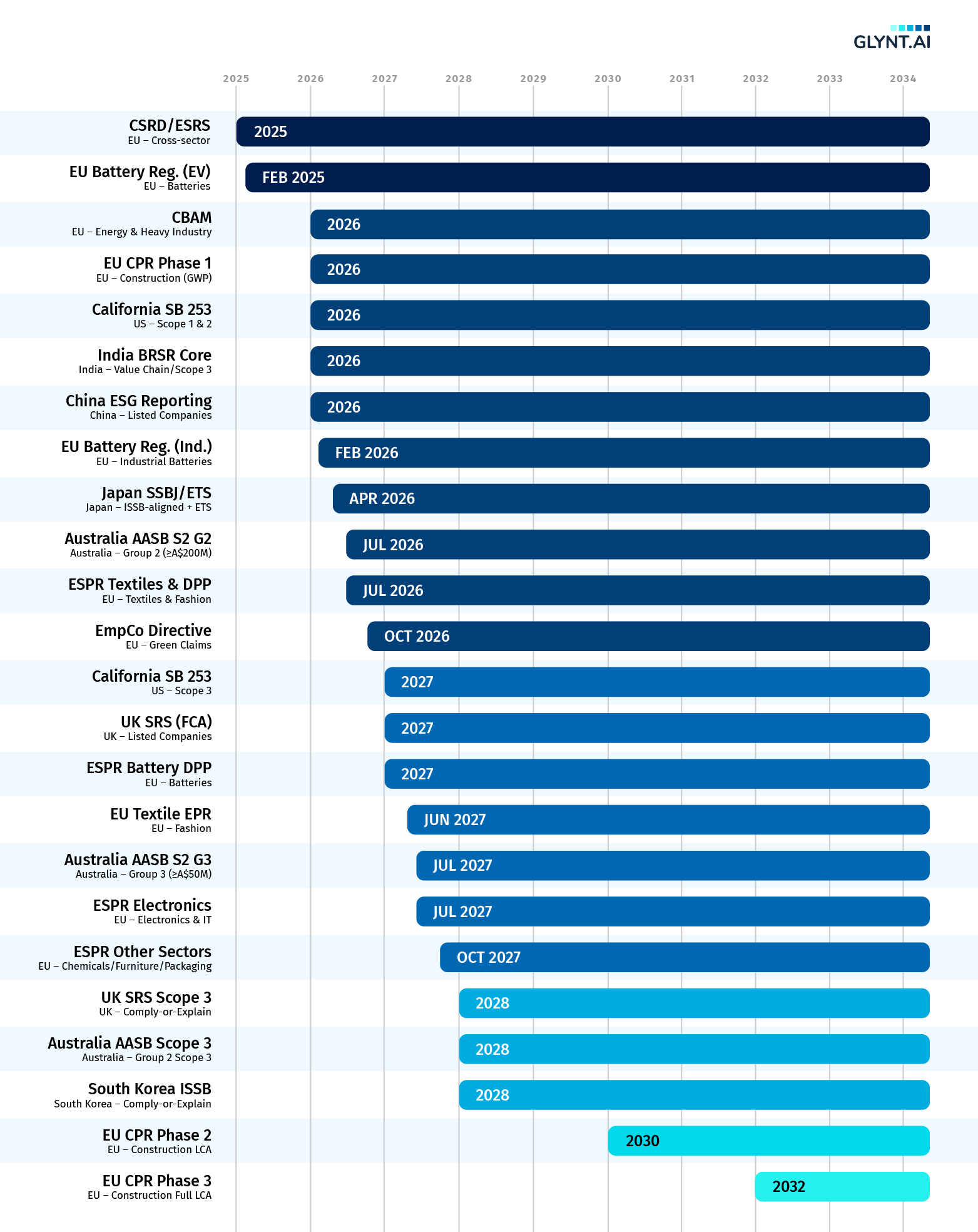
First, as the chart below shows, there were two active PCF regulations in 2025 and this is growing to 24 separate regulations by 2032.
Current and Upcoming Reporting Requirements for PCF and Scope 3 GHG Emissions
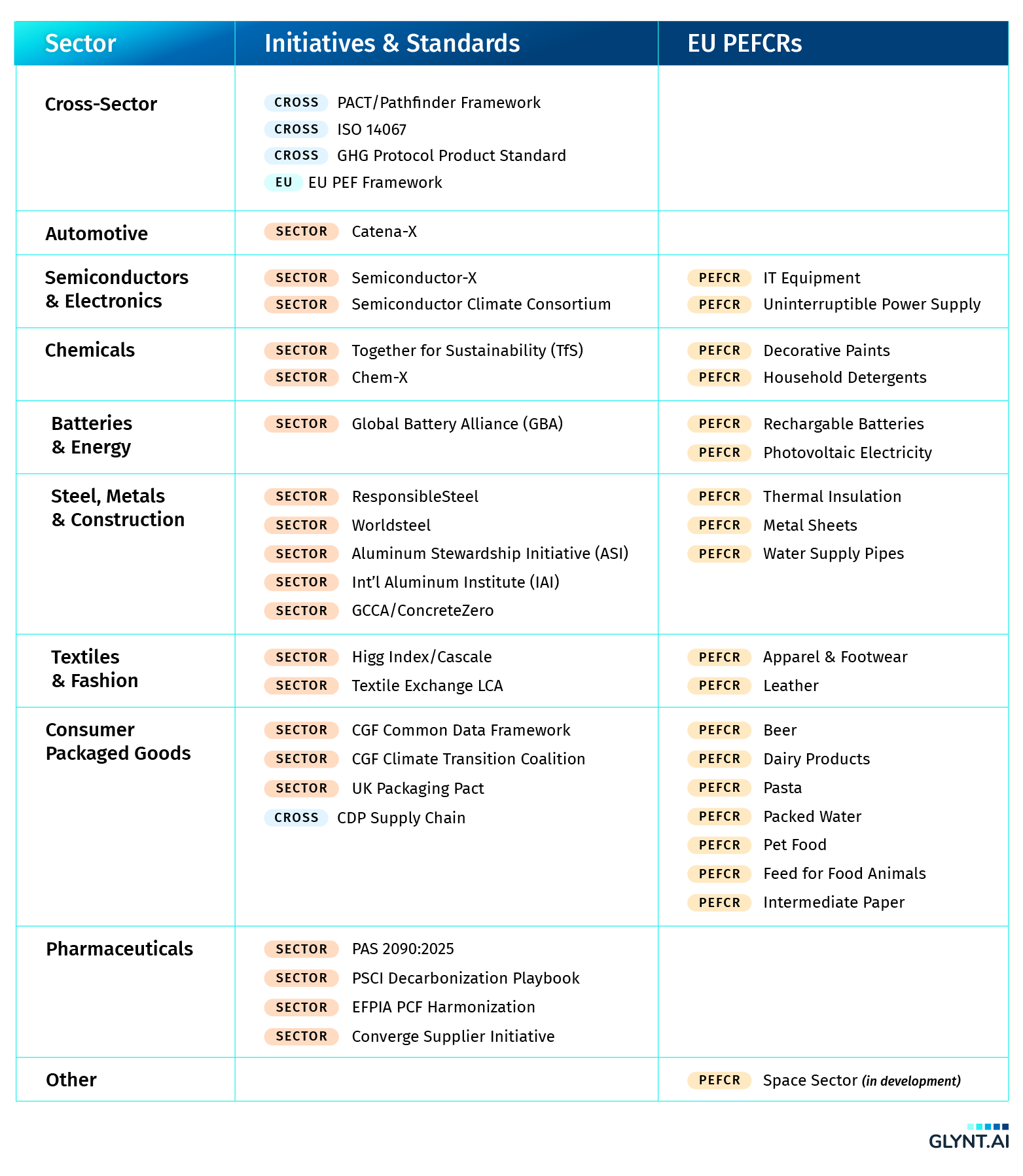
Third, if 24 standards are not enough, there are 25 additional reporting requirements to consider. PCFs are shared along the supply chain, so numerous supply chain consortia are active in setting data format and data sharing standards. The EU has industry-level PCFs too, through the Product Environmental Footprint Category Rules (PEFCR). PEFCR started in 2013 and many were updated in 2025.
Additional PCF Data Format and Data Sharing Standards from Industry Consortia & PEFCR
The Bottom Line:
Ganser was right. A tsunami of varied reporting requirements is coming towards sustainability and finance data teams. And this leads to the second part of Ganser’s keynote: The time to build your data foundation is now.
It takes months to prepare audit-ready data for any reporting standard, and with the incoming waves of requirements, sustainability teams risk getting stuck with expensive, slow, and scattered systems. This will lead to reporting errors and one siloed calculation will contradict another.
Prepare once. Report everywhere. GLYNT.AI’s unified data system captures and structures your PCF and Scope 3 data so you’re ready for every regulation, now and as they expand.
